
Should I Sell My Home in 2026? Alberta’s Housing Market Explained

Alberta’s Housing Market Has Been Strong, and That’s Exactly Why This Moment Matters
Alberta’s housing market has not been quiet. In fact, it has been one of the strongest performers in the country. Population growth surged. Sales climbed. Prices rose rapidly through much of 2024 and into 2025, particularly in Calgary and surrounding areas. Compared with much of Canada, Alberta offered something increasingly rare: momentum paired with affordability.
But strong markets evolve. And as Alberta moves toward 2026, the conversation is beginning to change. Not toward decline, but toward balance.
That distinction is critical, especially for homeowners and buyers deciding whether to sell, hold, or relocate to Alberta next.
From Acceleration to Balance Is Not a Weakness
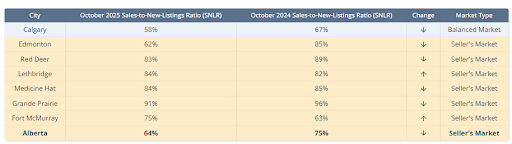
Economists have begun to describe Alberta’s housing market as transitioning from exceptionally tight to more balanced. Sales have slowed from their earlier pace, listings have increased, and price growth has moderated. This shift is not unexpected after such a strong run.
TD Economics has pointed out that this rebalancing comes after a period of double-digit annual price growth, a pace that few markets can sustain indefinitely. From that perspective, some easing in price pressure is not only healthy, but necessary.
What matters more is what comes next. Starting from a more balanced position tends to support steadier, trend-like price increases rather than sharp corrections. In other words, normalization, not reversal.
This is often the phase where markets stop making headlines and start rewarding patience.
Alberta’s Economic Backdrop Still Supports Housing Demand
Housing does not exist in isolation. Alberta’s broader economic outlook continues to play a significant role in supporting demand.
ATB Financial’s most recent economic outlook frames the coming year as one shaped less by rapid expansion and more by execution. Growth is expected to continue, though amid crosscurrents tied to global trade, inflation, and shifting population trends. That kind of environment tends to favour regions with relative affordability, diversified employment, and room to absorb newcomers.
Alberta continues to meet those criteria. Job opportunities remain a draw. Cost of living remains comparatively low. And for many Canadians priced out elsewhere, Alberta still represents one of the clearest paths to ownership.
Why People Are Still Moving to Alberta
Even as housing activity cools from its earlier highs, people continue to move to Alberta in large numbers. The reasons have been consistent.
For buyers coming from British Columbia or Ontario, the math often speaks for itself. Detached homes remain attainable. Newer communities offer space and infrastructure without extreme price tags. The trade-off between lifestyle and affordability is far less severe than in many other provinces.
RE/MAX’s outlook for the Calgary market reflects this reality. While price growth has moderated, demand remains underpinned by migration, employment, and relative value. The market is adjusting, not stalling.
The Question Many Homeowners Are Quietly Asking
As the pace of growth slows, some homeowners are beginning to revisit a familiar idea. If the market is no longer surging, is it better to sell in 2026 and reassess?
The instinct is understandable. Rapid growth creates confidence. Moderation creates doubt. But selling during a transition from acceleration to balance often leads to outcomes that feel logical in the moment and regrettable later.
Balanced markets are not signals to exit. They are signals to think carefully.
Why Selling During Stabilization Can Backfire
When homeowners sell during periods of stabilization, they often exchange uncertainty for permanence. Any unrealized appreciation becomes final. Future gains belong to someone else. Reentry typically happens later, under less favourable conditions.
In Alberta’s case, stabilization follows strength. It does not erase the fundamentals that drove growth in the first place. Population inflows, employment opportunities, and relative affordability have not disappeared simply because price increases have slowed.
Real estate has always been less about timing peaks and more about maintaining position through cycles.
Refinancing as a Tool for Flexibility, Not Reaction
As volatility fades, refinancing is becoming relevant again for different reasons than before. It is no longer about racing rates. It is about structure.
With borrowing costs stabilizing, refinancing can help homeowners improve cash flow, consolidate debt, or access equity without giving up ownership. For those planning a move to Alberta, it can also create the flexibility needed to hold one property while purchasing another.
In balanced markets, flexibility often matters more than speed.
Buying in Alberta While Holding Property Elsewhere
One strategy gaining quiet traction is holding an existing property and buying in Alberta with minimum down. This approach reflects a recognition that selling during stabilization may not be optimal, particularly when rental demand remains resilient.
For families relocating, it can mean upgrading lifestyle without abandoning long-term positioning. For investors, it offers exposure to markets that continue to benefit from migration and value-driven demand.
This is not about speculation. It is about staying invested while adapting.
Why Secondary Markets Are Becoming More Relevant
As conditions normalize, attention often shifts away from city cores and toward surrounding communities. Alberta’s secondary markets have absorbed much of the province’s growth, offering newer housing and more attainable price points.
These areas have benefited from the same drivers supporting major centres, but with less volatility. For many buyers, that balance is increasingly attractive.

The Risk Is Not Slower Growth. It Is Misreading the Moment.
Markets rarely move in straight lines. Rapid growth phases tend to give way to periods of adjustment. The mistake is assuming that adjustment signals the end of opportunity.
Economists increasingly describe Alberta’s housing outlook as one of steady, trend-like growth rather than dramatic swings. For long-term participants, that environment often proves more durable than boom-and-bust cycles.
The greater risk lies in stepping aside just as a market finds equilibrium.
Final Thought
Alberta’s housing market has been strong because it has been grounded in fundamentals, not frenzy. As growth moderates, the market is not losing its appeal. It is maturing.
For those considering whether to sell, hold, or move to Alberta, the decisions made during this balanced phase may matter more than those made during the surge.
Markets reward patience. They also punish hesitation disguised as caution.
At Merge Mortgage Group, we work with clients across Alberta and support Canadians relocating from British Columbia, Ontario, and beyond. We assist newcomers to Canada, families building homes, investors expanding rental portfolios, and homeowners looking to create flexibility without stepping out of the market.
Learn more at mergemortgage.ca and start a conversation focused on positioning, not prediction.